Showing posts with label Ministry of Education. Show all posts

Wednesday, December 28, 2011

Extreme views on Education -I think not!


In a comment to my  Christmas blog Mr and Mrs Symonds , formally of Auckland and now living in Sydney, wrote that it was 'because of people like you we have taken our children to be educated in Australia'.  'Your views on education', they wrote, 'are extreme' and 'out of touch with what parents want of a modern education system'.

They began their comment by saying they were 'glad I was going from New Zealand education' and concluded with the phrase 'weird and creepy' - I presume they were referring to themselves? And I have no idea who they  include in the 'people like you' comment nor what they define as a 'modern education system' that parents like them want.

Below is a comment from a New Zealand teacher now working  in Australia. Is this the  'modern system' that parents like the Symonds want? It certainly reflects the agenda of the current government in New Zealand.

'We are right into national testing over here. There is now national testing of all year 3, 5, 7, and 9 students. It just used to be in the other states. Victoria used to be told that we were lagging behind the other states but now, low and behold, after national teaching we are one of the top states. We also have online testing in Numeracy and Maths with the results going to the Department. This is done 3x a year. Our reports are also put directly into the Department. Accountability is everything, don't worry about the teaching. We are told that it does not matter where the students start our job is to get them up to national average and they are trying to bring in performance based pay as well. Also pay incentives for expert teachers and principals to work in disadvantaged areas.’

Sounds very Eastern European to me - something Joseph Stalin would have been proud of or right-wing political American thinkers today. Hardly modern.

Here is what one American educationalist has written ( Glickman 2006)

Today, measuring the accomplishments of students, teachers, and schools by standardised test scores and handing out rewards and punishments for reaching or failing to reach state and federal standards has become commonplace.

In such a climate, we typically err too much on the side of avoiding failure by relying on externally approved " research based" programmes, teaching methods, and assessments that are officially prompted by state and federal governments ( through their agencies).

What we lose in the process is imagination.Failure cannot go unchallenged, but what we have today is our own failure to imagine new possibilities and the worth of what has already worked well*. There is no tragedy in reaching for the stars and falling short; the greatest tragedy in never reaching at all.'

*added

Anyway the below are the 'extreme views' on learning I have been sharing (and will continue to do so) over the years.  I will leave it over to anyone who reads the blog to decide if they are  'weird and creepy' or 'not what parents want for a modern education'.

It is important to appreciate that students are  entering a new age of creativity ; an  era of knowledge creation - where the ability to continue learning, to  develop new ideas, even when confused, will be an important attribute.

I believe that a modern education system ought to focus on developing the talents and gifts of all students and not to judge their success on their test scores only in literacy and numeracy.

I believe that students future success depends on the power of their personal motivation realised :through making choices; achieving mastery; and in the process developing a powerful sense of personal autonomy. As part of gaining success students need to value personal effort and focused practice. These ideas are ignored by standardised testing. Effort and practice sound old fashioned but if neglected little learning will stick.

I believe that learning ought to based on helping students answer questions that engage them in realistic studies; studies that  call on whatever learning areas are necessary to solve the problem. And students also need to appreciate the power of collaborating with others by working in teams.

I believe that the role of the teachers is that of a creative learning coach who follow the advice of educationalist Jerome Bruner who said. 'teaching is the  canny art of intellectual temptation'. Teachers should help students construct their own learning  - and learning should be personalised to suit each learner.

I believe that teachers should ensure all  the various strategies and skills are in place ( including literacy and numeracy)  so students have every chance of success. This includes integrating modern information technology.

To achieve quality learning it is important for students to dig deeply into any learning challenge - to do fewer things well so as to develop the importance of personal excellence.

Can't see what is not 'modern' or is 'weird' in the above.

Tuesday, December 6, 2011

Whose agenda ought we be following in education?


While  schools are increasingly being constrained by the imposition of National Standards right wing politicians introduce another failing idea from the USA (and the UK) -  Charter Schools' -  which are to be given considerable freedom.

I made use of 'The Most Important Speech' posting - based on Diane Ravitch's for my blog below. The linked blog is well worth a read by all principals and BOTs - as is the PDF file it refers to.


When politicians interfere with educational provision without democratic consultation we are in trouble. All too often such ideas have popular appeal until they are given more thought. Without time to consider implications the ideas develop a life of their own.

These politicians are undermining education for their own political ends. The idea that our schools are failing is a cynically crafted myth by those who want to privatise 'our' schools.

American educational philosopher Horace Mann wisely said, many years ago,  that when partisan politicians introduce their ideas the result is that public education is demeaned as is respect for professional judgement.  Educational consultant Michael Fullan  has written more recently that politicians always get it wrong; he should know because he has wrongly advised politicians in the UK and Canada!

Educational critics start off by stating that schools have let too many children fail -in New Zealand Ruth Richardson, Bill English, John Key, and now, New Zealand's answer to the American Tea party, - John Banks.

Three things are ignored in the lack of debate.

Firstly the troublesome home circumstances created by poverty is ignored. This poverty has been escalated by failing market forces policies which had at their premise the belief that wealth would 'trickle down'. New Zealand is now one of the countries with the widest 'rich/ poor gap' in the Western World. Conservative politicians fail to acknowledge that the so called 'achievement tail' correlates to the 'one in five students' living in poverty and prefer to spread the more simplistic 'schools are failing 'one in five students.' What is ignored is that even before the first day at school there is an achievement gap.

There is a story of two doctors waiting by a river who see a somebody drowning and the rescue the person.Then another drowning body appears and they pull him out, then another , and another. finally one of the doctors runs up stream and the other calls out, 'where are you going?' The running doctor calls back, 'I am going to see why they are falling in!'

Are we looking upstream to see the causes of school failure?

Politicians like John Key and John Banks say that teachers are using poverty as an excuse yet lack of equality and opportunity can't be that simply ignored.

Secondly while choice is trumpeted as the reason for charter schools the public school system is increasingly being constrained by the politicians imposition of standards- another simplistic political idea with appeal until the consequences are thought through. The ideas of standards come to us from the USA and UK where they result in narrowing of the curriculum, league tables and teaching to the tests. Ironically the most successful American Charter schools are those that have the tightest accountability requirements - so much for choice and diversity.

Thirdly New Zealand schools score highly ( in the first four or so) in the International Tests in Literacy , Numeracy  and other curriculum areas. Both the UK and the USA are seen as failing systems in this respect yet they are the countries our politicians want to follow! Politicians are blind to the more liberal approaches of such countries as Finland. Top achieving countries, like Finland, do not test every child every year. And those that do ignore creativity, innovation and imagination.

Both National Standards and Charter Schools, no matter their superficial appeal, are not silver bullets - raising children achievement is not as simple as their proponents think. Such ideas contribute to a poisonous narrative that colours the minds of the public and destabilizes  the reputation of public education and will add to the gap between so called 'winners and loser' schools.

The sad thing in all this is that the enlightened New Zealand Curriculum, the vital role schools play in creating a democracy, and innovative ideas that creative schools are implementing will be ignored .

Already most primary schools have , for their survival and reputation, have already distorted their programmes to focus on literacy and numeracy - and an obsession with testing -  resulting in students with talents and passion  in other areas  being ignored.

National Standards and Charter Schools ( if they are to be  tied to tight accountability requirements) are no answer. If Charter Schools are to be given given greater flexibility and choice then this also ought to be given to all schools.

There is no argument about the importance of literacy and numeracy but if New Zealand is to become a creative and innovative country then developing every students gifts and talents ought to be the driver for all school change. What is missing by current reformers is the neglect of imagination, creativity and imagination.

For this we need to re-imagine schools completely. We need to move out of  a standardised  'one size fits all'  schooling and move towards personalising education.

Educators understand that children develop in different ways and at different paces and respond differently to different experiences - they cannot be seen as a easily defined product or measured outcome.

What we need is a new narrative for a 21stC education system  one that promotes critical thinking and innovative ideas required for the future.

Creative teachers have always known this.

This ought to be the focus for anyone involved in education.  History will not look kindly on politicians ( and schools) that support such retrogressive ideas. Until this happens how many students will learn to see themselves as failures. How many good teachers will lose hope and leave? Who will want to be a principal in such a managerial, uncreative and technocratic environment?

We have to fight for a different narrative - one that makes sense to parents and the wider community once they have been give the time to consider the faults of the current bunch of self serving conservative politicians.


Monday, November 28, 2011

Where has that Aussie confidence gone from their teachers -and a look at where New Zealand is about to go!


A little bit of Ned Kelly spirit is required to combat the technocrats in charge in Aussie (and now in New Zealand).

Guest blog by Phil Cullen
Ex Director Primary Education Queensland.

Check out Phil's website.


ORWELL IS HERE!

The year of Orwell and  the introduction of Orwellism has been delayed.

 In the 1950s when we first read about a future manipulated, dysfunctional society, 1984 seemed to be so far away. ‘1984’ didn’t happen when it should have. Society was fairly comfortable in 1984, except for Queensland. The leader there had been appointed by divine authority, he had suggested; and made some curious judgements about schooling on moral grounds.
None could even imagine, then, a future where the country was run by a focussed control-pedant , who preferred to rule by fear-based, heavy-handed distrust and make decisions about  schooling just to illustrate his/her authoritative control. 
By the 1960s, the western world was on the cusp of creating a school culture of learning that would have had no equal in history. These years produced the greatest thinkers and writers of the 20th century; and teachers of the time, straining to shatter the shackles of colonial styles of teaching-learning were about to break loose. They read and they observed and they talked and they listened and they shared. The mood of the late sixties and seventies with its Deweys, Goodlads, Bassetts, Parrys, Postmann & Weingartners, Holts, Plowdens, Cleggs...such a long list of child-oriented scholars and writers...was one of hope
Every state Australian state bureaucracy appointed visionaries to important positions [e.g. Guymer in Q’ld, Swan in NSW, Jones in S.A., Shears in Vic., Beare in ACT] irrespective of the local political power base. Schooling was on the up and up - despite one or two attacks [e.g Back to Basics, M:ACOS] that the press enjoyed featuring.
The dystopic political arrangements for an Orwell-1984-style-Australia were put on hold for a quarter-of-a-century. It was destined to happen as soon as despotic managerialists and measurers introduced euphemisms as articles of faith [e.g. ‘outsource’ = don’t trust your own; ‘down-size’= sack those you fear] circa 1990. The public learned to tolerate this inconsistent square-peg  ruddism [in Q‘ld. in particular] without dissent; and ‘orewellism’ entered the language as a suitable descriptor for what eventually happened in 2009. Big Brother showed himself.
Turn back to the real 1984.
 The year itself, might have been considered a fizzer for those who had trusted  George Orwell’s predictions, but child-oriented schooling itself was well under way and schools were happily optimistic at that time. Big Brothers were not necessary. Teachers believed in themselves. They felt proud of what they were doing.
I could open a Principals Conference in 1984 by sayingThere is no task so demanding, no occupation [apart from that of religious minister or priest] so ethically professional than that of a primary or secondary teacher. Its impact on the welfare of the world, the care for people as people, the influence that it has on the achievements of each person and subsequently of each nation places the profession as something apart from all other occupations. It is concerned about a nation’s most precious commodity and its richest resource – children. It is a self-monitoring, self-improving profession ...and it is in this context that we have foregathered. We hope to make a determined and realistic commitment to enlivening classroom practices because they are the base-line of what we are all on about.”
The conference was about ‘Excellence in Teaching’. Attenders talked about teaching and learning and on how to improve both.  They could say that and do that in 1984 and believe in solid, immovable professional ethics. No jumped-up politician, lawyer or sciolist would dare to tell teachers what to do and how to do it. The force felt solidly professional from top to bottom and remained so until 1990 or thereabouts.
We can’t make those sort of statements that I made, anymore. The political Darleks, ‘utterly without pity, compassion or remorse with every emotion removed except hate’ have moved in. Professional schooling principles have backed off.
A 2011 national conference for principals [that I ‘attended’ on-line] was about improving scores on national blanket tests. Schooling by numbers. Pupil welfare and progress did not get much of a mention. Ethics had travelled a long way .
It was another sign that Orwellism was well entrenched. It had twenty-five years to arrive and it had infected all parts quickly.
What is orwellism? 
 Described as oligarchical dictatorship,  based on a nonsensical, peculiar thought process that manipulates social structures on behalf of the most powerful,  participants can indulge in double-thinking by holding two contradictory beliefs and believing in both. Teachers can believe in freedom to learn and use fear-driven practice techniques to prepare for Big Brother’s NAPLAN tests.
Thus, by embracing inconsistent concepts, school principals can acquiesce to the decadent political view that low test scores indicate poor teaching and shabbily-run schools; and their professional conscience won't worry them. Professionally neutered, they are unable to dissent from or offer ethical advice to political masters. The work-force generally is on the same wave-length. The school-tardy, both pupils and teachers,  must be punished; and all adults generally subscribe to this notion.
With ethical principles in suspension through political mandate, this further entrenches the style of Orwellian oligarchical dictatorship that decries individuality and teaching ethics.
Teachers are told what to do and what to think. School leaders acquiesce as it is easier to do do so. Double-think prevails. True-blue professional codes are trashed with organizational approval. The sycophants feel even more secure and comfortable; and the ultimate victims are not taken into account at any stage. .
Whereas politicians kept out of –perhaps avoided -  serious curriculum considerations in the real 1984, there has been a change of social climate since then. As George O himself said in the other ‘1984’, “ In our age, there is no such thing as ‘keeping out of politics’ ; and politics itself is a mass of lies, evasion, folly, hatred and schizophrenia.”  So its welcome to that sort of world for all 2011 school personnel and clients. 
Teachers probably sense the outrageously camouflaged intentions of our fat controllers, but cannot do anything about it. If the playing field was level, their organizations would be able to say to Her Overbearance, “We won't give your tests to our pupils.  We love them and want them to learn. It is unworthy of you to ask us to do so and a serious breach of schooling ethics.”
The field is very steep. The ball gets away from you if you don’t try to stop it. Orwellism is in full swing in dystopic Australia

Friday, November 25, 2011

National's 'brighter future' doesn't include the students or their teachers!


The current National Government has ignored educators worldwide and opted for an accountants view of education turning students into products and schools into factories so as to give consumers a choice - but what a choice!

What many feared has come to pass.

Populist political simplicity has won the day!If you repeat a half truth ( one in 5 students are failing) without also factoring in the effects of poverty and poor health of  unknown in other civilised countries. One fifth of our students live in distressing poverty ( that is , of course, 1 in 5)

The Government seems to admire a McDonald's approach to education and , if they knew their history, one promulgated by Joseph Stalin in the 1930s. Joseph also believed in the pseudo science of measurement as do technocrats around the world.

Read what a young teacher wisely has written - shame many principals don't have the same insight.

‘Learn from what not to do from reform in the US’.....
 
said Joe Bower from Alberta, Canada quoting from “Testing, Testing’ by Larry Bool and J.C.Couture.  They maintain that the absurd elements of the absurd US reform are largely ideological....
 
 
*market-based business methods for the running of schools;
*emphasis on standardisation and narrowing of curriculum;
*fostering choice and competition among schools;
*making judgements based on test data;
*merit pay and other incentives;
*faith that technologically mediated instruction will reduce costs;
*overwhelming top-down approach which tells everyone what to do;
*holds everyone-else accountable.
 
For New Zealand and Australia [as well as Canada] to copy such reform elements is beyond belief - where was the professional leadership - setting tests no doubt!

And read what a  wise old Director General of Queensland Primary education has to say.

And check out this warning from a great Canadian blogger!

True science , according to Brian Cox Science Adviser to the previous Ministry of Education and Science in the UK is 'being happy with the unknown' - a search to reach for the stars.

A quote from American educationalist Glickman 2006  clearly states the scenario we are moving into in New Zealand.

' Today, measuring the accomplishments of students, teachers, and schools by standardised test scores and handing out rewards and punishments for reaching or failing to reach state and federal standards has become commonplace.

In such a climate, we typically err too much on the side of avoiding failure by relying on externally approved " research based" programmes, teaching methods, and assessments that are officially prompted by state and federal governments ( through their agencies).

What we lose in the process is imagination.Failure cannot go unchallenged, but what we have today is our own failure to imagine new possibilities and the worth of what has already worked well*. There is no tragedy in reaching for the stars and falling short; the greatest tragedy in never reaching at all.'

*added.

And from the  UK  another warning ( source NZ Herald).

'Survey slams schools.

Many British adults say they did not realise their true potential until years after they had left school. A survey of 2000  people found, on average,   they cited 22 as the age they found their niche in life.  Nearly half of those surveyed felt they  were regarded as average or poor students while they were at school. Of those, 15% said they never got the chance to discover their talent in the classroom because their teachers had written them off as failures'.

It seems to me that the challenge of 21stC schools is to ensure all the talents and skills of every individual students are realised - and, according to business philosopher Peter Drucker, the first country to develop such an education system will win the future.

Some countries like Singapore are doing just this.

 It is a shame that our government looks back to failed approaches , used by failing countries, for inspiration. And it is a shame that not many schools are developing true personalised talent based programmes.

 Most schools lost the plot years ago and now the 2007 NZ Curriculum - an antidote to previous curriculum approaches, has all but  been sidelined.

For more read Larry Cuban's blog

Saturday, November 5, 2011

Time for Democracy in Schools


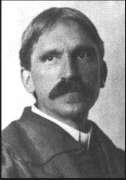
John Dewey

Everybody in the modern world believes in democracy so why would anybody question the need for our schools to be democratic? Rather, the question should be why if we believe in democracy are our schools manifestly so undemocratic?

Educationalist John Dewey, writing early last century, saw implanting democratic ideals in students as the schools most important priority. Dewey believed that ‘children grow into tomorrow as they live today’.

One wonders what messages students are currently receiving from ‘their’ schools that are still controlled by the same hierarchical power relationships that worried Dewey?

The truth is that there is little evidence of democratic ideals in our schools.  Our traditionally oriented schools are places where certain information is given, where certain lessons are learnt, where certain habits are formed, and where students succeed by being judged on what others have decided is important. In this traditional model education is seen as a preparation for the future where students learn things ‘just in case’ they will need it. Obedience and conformity to requirements are the keys to success in such a system.


Dewey conceived schools differently. He envisioned them as learning communities seeing as important ‘the nature of relationships between student and student, student and teacher, and teacher and teacher’ and, of course, with the wider community. Dewey’s ideal for schools was for them to be based on participatory democratic values. In Dewey’s mind such values would be able to tap into, and unleash, the ‘immense intelligence’ of all students.  Dewey believed that ‘all those who are affected by social institutions must have a say in producing and managing them’.

Democratic ideals of freedom and creativity emerged briefly in the heady days of the 1960/70s but failed to change traditional schooling. Today there is now a new interest in a democratic education which places the needs of individual students central. This more personalized approach is implicit in the intent of the 2007 New Zealand Curriculum where it states the vision is for all students to become ‘confident life long learners’; students  who are able to ‘seek, use and create their own knowledge’.

Such ideals of creativity, freedom and personal responsibility in any organisation are currently confronted by elite power structures run by experts, bureaucrats, and administrators. In education the elite who make the most important decision are the Ministry of Education.

 As a result of their actions school principals, teachers, and in turn students, are given little power and responsibility in the schools where they spend most of their lives.

The surveillance culture, imposed by the Ministry of Education and the Education Review Office, has created a risk averse culture which puts innovative approaches at risk. Compliance, not creativity, is now the name of the game. The problem is that our current standardized ‘one size fits all’ system is becoming increasingly unsuccessful as the number of students failing, or disengaging from the process, indicates. New thinking is required if we want all students to succeed, and if we want New Zealand to be a more inclusive democratic and creative society.

Developing democratic participatory ideals in schools is a difficult challenge as it confronts the ‘power down’ leadership style that is now firmly in place. As we enter what some call a ‘Second Renaissance’, or ‘Age of Creativity’, we need an education system that is able to realize the gifts and talents of all students not just the academic students as at present. To make things worse the current  government is determined to impose ‘National Standards’ in literacy and numeracy on primary schools which will determine student success in a very narrow range of intelligences.

The process of how to develop democratic schools still waits to be realized.  Sadly even creative teachers, once they become principals, morph into benevolent leaders who then expect teachers to do what they are asked of them! Most people, it seems, only want to be free from those above them!

How to provide direction, while at the same time tapping the creativity of individual staff members, is the challenge for principals – one which needs to be replicated in individual classrooms.

The success of democratic schools will depend on the strength of the shared purpose, vision, or beliefs, felt by all staff members and, in turn, their willingness to be held accountable to them.

Tuesday, October 11, 2011

National Testing - here we go.

Guest post by Allan Alach
Halfway through the first week of the term break, and the nonsense keeps being spilled out. The depth of deviousness being displayed by the Ministry of Education (MOE) , no doubt following orders from above, is beyond comprehension.
Schools with ‘non-complaint’ charters have been aware that the MOE were in the process of mailing out “letter two’, setting requirements for charters to be compliant, and imposing a tight deadline for this. That was only to be expected.
However, for these letters to be dated (and posted to schools) on October 7th, the last day of the term, conveys another story. So does the tight deadline of October 21st, the Friday of the second week of the term break.
In the words of the cliche, ‘it’s not rocket science’ to know that schools are closed during the breaks, and that mail is therefore not likely to be processed. So that then raises the question: Were the dates, of posting, and of the deadlines, set during the breaks because of ignorance or deliberate action?
I don’t think it takes too much pondering on this to come to the obvious conclusion - this is deliberate, especially the deadline date of October 21st. Why would this be, I wonder. Again the conclusion is obvious. The MOE (and their political masters) want schools to be caught out as non-compliant, to then justify the appointment of limited statutory managers. As we’ve learned previously, this is all targeted to happen in the closing weeks of the election campaign.
This just drives home the point that has been made over and over again - there is nothing educational about national standards. This is purely for political self interest.
If education and ‘raising standards’ was genuinely the issue, then there would be far more compromise and discussion to work through issues and concerns, to ensure that systems and processes were developed that would be educationally positive.
We know that the National Party led government are not taking any regard of international and national research and evidence that clearly shows that a) standards/testing based regimes don’t ‘raise achievement’, and b) this narrowing down of the curriculum is very harmful to children’s overall educational development.
This disregard of expert evidence is not a New Zealand phenomenon, and so this points also to a wider agenda.
The lack of morality in using vulnerable children as political levers is beyond my comprehension.
Just to stir the pot some more, the MOE, (or more specifically, the National Standards Sector Advisory Group), is advertising for a contract senior project manager:
Job Description
Contract Senior Project Manager for a 12 month term - start date from mid Oct to mid Nov.
Project Purpose
  • The Consistency Framework will establish a nationally consistent approach to forming overall teacher judgments in relation to National Standards, and aims at reducing teacher’s workloads.
  • The Project has two main components:
      • The educational component (Framework) will involve the necessary research and analyses to develop empirically-calibrated scales and exemplars.
      • The systems development component (Architecture) will involve the development of the necessary software for teachers to have reliable and easy access to data and reports to enable them to make judgements in relation to the empirically-calibrated scales.
  • Advisory groups have been established
  • Three advisory groups have been established to provide advice on the development of the NSCF.
  • The NSCF Project needs to implement the solution ready for the 2014 academic year.
Another link details the project in more detail and includes this phrase:
Project overview •
This project proposes the development of an empirically-calibrated psychometric scale for teacher judgments in relation to National Standards.
This is crazy talk. How can an ‘empirically calibrated psychometric scale’ be used to support judgements?
Psychometry is the application of measures of measurement to the various branches of psychology. IQ tests come under this framework - the very questionable belief that ‘intelligence’ can be given a number. The whole area of psychometry has been challenged on the same basis - how can human intellectual attributes be measured? They can be described, but measured? Given numbers? Ratings of worth? According to whom? If something is to be measured, what do we use to do the measuring? Why tool A instead of tool B?
My article in the latest issue of Education Today, on Mark Garrison’s book “A Measure of Failure - the political origins of standardized testing” explores this further in the New Zealand politically driven education context.
Another section worthy of note from the Project Overview website is this one:
The NSCF will be made straightforward and easy for teachers - using a software tool (possibly internet based).
Software tool? Euphemism for TEST.
Let’s reflect on this a little more. Software/online assessment….. why that describes e-asTTle.. I wonder who owns the intellectual copyright to e-asTTle?
For overseas readers e-asTTle is an existing computer based assessment system. Here’s the opening statement from the relevant website:
Welcome to e-asTTle
e-asTTle is an online assessment tool, developed to assess students’ achievement and progress in reading, mathematics, writing, and in pānui, pāngarau and tuhituhi. The tool has been developed primarily for the assessment of students in years 5–10, but because it tests curriculum levels 2-6 it can be used for students in lower and higher year levels.
e-asTTle provides teachers and school leaders with information that can be used to inform learning programmes and to apply teaching practice that maximises individual student learning. Many teachers using e-asTTle have found it to be a great tool for planning, for helping students to understand their progress, and for involving parents in discussions about how well their children are doing.
Get the picture? Ostensibly this was developed as a ‘formative’ assessment tool, however many people have had their doubts about this all along.
Back to the Project Overview, which continues:
The programme of work will be based upon:
  • Progression definition
  • Sample data analysis (based upon a collection of an evidence base and judgements on each progression from a sample of students). Note: The scale for each sequence of standards will be constructed from the data using Rasch analysis.
  • Standard setting
  • Software development.
Rasch analysis?
“Rasch models are used for analysing data from assessments to measure variables such as abilities, attitudes, and personality traits. For example, they may be used to estimate a student's reading ability from answers to questions on a reading assessment…”
or, how about this, from http://www.rasch-analysis.com/
“Rasch analysis can be applied to assessments in a wide range of disciplines, including health studies, education, psychology, marketing, economics and social sciences.
Many assessments in these disciplines involve a well defined group of people responding to a set of items for assessment. Generally, the responses to the items are scored 0, 1 (for two ordered categories); or 0, 1, 2 (for three ordered categories); or 0, 1, 2, 3 (for four ordered categories) and so on, to indicate increasing levels of a response on some variable such as health status or academic achievement. These responses are then added across items to give each person a total score. This total score summarise the responses to all the items, and a person with a higher total score than another one is deemed to show more of the variable assessed. Summing the scores of the items to give a single score for a person implies that the items are intended to measure a single variable, often referred to as a unidimensional variable.”
The Project Overview concludes with this statement:
Further notes
  • The professional judgment of teachers, about their students’ progress and achievement, is at the centre of the National Standards. The NSCF will support teachers to make consistent judgments and support accurate measurement of students’ progress against the standards. The NSCF will support, not supplant, the professional judgment of teachers.
  • There is a need for a system to ensure consistency in the way in which teachers integrate diverse evidence to form judgments, and measure student progress, against the standards.
  • The professional judgment of teachers in interpreting evidence of students educational achievement, including classroom observation, cannot and will not be replaced by a machine.
This is just ‘smoke and mirrors’ to obscure the indisputable evidence that a version of national testing will be in place for the 2014 school year.

Wednesday, September 28, 2011

Fasten Your Seatbelts!

Guest Post by Allan Alach


Well, as I’ve been predicting, along with many others, it seems, from this article by Kelvin Smythe, that national testing is on the way. I don’t know Kelvin’s source for this, but seeing as he was spot on with his story about the Ministry of Education seeking people to train for limited statutory manager roles in schools, we can expect that his source is accurate this time as well.


It was only a matter of time, as many commentators have been saying, for testing to appear on the radar. National’s standards were never going to work, for many reasons, all of which have been well expressed in many different forums. My suspicion is that the protests and non-compliance from schools is exactly what was expected and that we may have played very nicely into their hands.


As I have written previously in a number of other guest postings on this blog, this now opens the way for a probable attack on the lack of professionalism of principals, the New Zealand Principals Federation (NZPF), and even more importantly in the eyes of the National government, an attack on the New Zealand Educational Institute (NZEI). For overseas readers, the NZEI is the primary teachers union, representing principals and teachers, while the NZPF is a professional body for principals and is not their union.


These attacks would be used to justify the introduction of the national testing regime because 'of the unprofessionalism and vested interests' of these groups, and especially the NZEI for ‘protecting incompetent teachers.’ The only remaining question is whether this will appear as part of the coming election campaign, or be kept secret until after the election. My personal opinion is that while union bashing will be a feature of the campaign, the testing agenda won’t be revealed until after the election, should the National Party be returned to power. This would be consistent with other policies of the present government.


This approach is completely consistent with the models used in the USA, which is to be expected, seeing as the whole standards agenda, including rhetoric, seems to be a carbon copy of the process there. This link has been made time and time again, by many people, including Kelvin Smythe and Bruce Hammonds here in New Zealand and by Phil Cullen in Australia, and many others, and I’ve also drawn the dots together in my articles. Everything is tracking according to the predictions we’ve all made, and if you care to check out ALEC in the USA (especially their education policies) you’ll see where much of this originates.


The latest edition of the Education Today magazine will be out shortly. This includes an article that Bruce Hammonds asked me to write about the book “A Measure of Failure: The Political Origins of Standardized Testing” and especially looking at this in the New Zealand context. One thing that is very clear, from this, and many other books (for example “The Case Against Standardized Testing” by Alfie Kohn) is that standardized tests are imposed for political reasons, to enable the ‘school reform’ agenda to be set in place. Read this article when Education Today arrives and you’ll see what I getting at, and why.


Why ‘school reform?’ That is easy to answer, and the path is well laid out - to open the way for privatisation of schools. Phil Cullen has illustrated this very well in his Treehorn Express newsletters, as have many people in the USA. The most well known of these is Diane Ravitch and there are many, many others, such as Alfie Kohn and Susan Ohanian. How much more evidence do you need?


How about this article then?


“What Does Rupert Murdoch Want With America's Schools?

Murdoch has made it very clear that he views America's public schools as a potential gold mine.”


That’s Murdoch. What about the Pearson Group? McGraw Hill? Both are heavily involved in US education. Pearson Group have a nice little deal running - one of their subsidiaries helped develop the USA Common Core Standards (like national’s standards, but worse). Another subsidiary is developing curriculum resources to ‘assist schools in raising achievement” against these standards. And so the stories keep on coming - they’re all out there in plain view, if you care to look. Here’s an example: Erect Wall Between Test Companies and School Officials


There are many USA websites and Facebook pages that provide all the information you could ever want. I’ve listed these several times in previous articles.


Think we are immune from this corporatisation? Why would you think that? Is there an opportunity for the private sector to make profits running schools? Seeing as a private company is making a profit out of running a prison in Auckland, why would schools be exempt? Is there an opportunity for private companies to prepare and sell curriculum resources that will supposedly help children pass tests? Common overseas; are we any different?


No.


The future is very clear.


National testing, and all that follows from this, is on its way unless the people of New Zealand take action to stop it.


Unless there has been much preparation behind the scenes, which has been kept secret, I can’t see systems being ready for this to arrive in 2012.


With the three year term of a New Zealand government, 2014 is the next election year. Introducing tests then seems to be politically risky. What does that leave?


2013.

Saturday, September 24, 2011

The Ministry of Mindcontrol is also the Ministry of Truth.


Guest Blog by Allan Alach

I had hoped to be able to write an education focussed article for once, but in today’s political climate, education is way off the agenda.

So we are now are in the next phase of the battle against national’s standards (which is what they really are), following the imposition of charters on to non-compliant schools by MiniMind, a.k.a Ministry of Mindcontrol a.k.a Ministry of Education.

It seems, from the reports of MiniMind threats to schools up north, that Orwell’s label “Ministry of Truth” (Minitrue) also be applied to MiniMind, to give us MiniMind & Minitrue.

For those who don’t know the story, on Friday September 10, two principals of small schools received a telephone call from a regional Ministry of Education official over the ‘disclaimers’ each school’s Board of Trustees (elected groups of parents to govern schools) had added as a protest against the forced inclusion of Ministry of Education defined targets in their school charters.

This Ministry official apparently told both principals that the disclaimer had to be removed by Monday or else a limited statutory manager would sent in to each school. The stories recounted by both principals are very similar. The Ministry, on the other hand, deny such phone conversations took place, or that the threat of limited statutory managers was made.

Two very different stories here. Someone is telling ‘porkies’ (a big lie - from the English rhyming slang 'porky pies', which rhymes with lies.)

Who do you think it is? The two principals who separately related their recollections of the phone calls, or the Ministry of Education, wearing their Minitrue hats?

Let’s take, at face value, the Ministry denial, that limited statutory managers are not being sent in to schools who are fighting national’s standards, and the forcibly imposed charter targets.

Why then is the Ministry approaching people to train them for a statutory manager’s role, with November 21 being mentioned as a possible date? What’s the significance of November 21, apart from being the Monday in the last week of the election campaign? I see that Kelvin Smythe has also picked up on this. Please note his advice over the use of the phrase ‘disclaimer.’

Looking at developments over time, connected with this planned strike against schools in the last week of the election campaign, we can discern a degree of increasing anxiety at higher levels that all is not running to plan. Have you noticed that the Ministry’s statements and actions keep changing? That what is acceptable one week, is not acceptable the following week? This makes it even more vital that we all hold fast until the election, at the very least.

Tragically, the Ministry of Education has been diverted from the role of supporting and developing education to becoming the policing arm of government. The aggressive attitude of the Ministry towards schools, regardless of their positions over national’s standards, is very disturbing. Note also that the government (and Minister of Education) is being very quiet on these moves against schools, leaving the Ministry to take the ‘bully boy’ role. Anything to do with the coming elections by any chance?

I am sure that many Boards of Trustees will have noticed that their national organisation, the New Zealand School Trustees Association (NZSTA), is extremely quiet over all this. Given that a significant proportion of their member school boards are under extreme pressure, one would think that this association would be providing support and guidance. Not a sound, it seems. What does this tell us about the political allegiances of the movers and shakers in key NZSTA positions? All we need to know, actually.

This year has seen many key people leaving the head office of the Ministry of Education, for unspecified reasons. It is very easy to speculate that these departures are linked, and that many people, those with principles, have walked out. We can also speculate that there are Ministry employees, both in the head office, and in regional offices, who are very uncomfortable with the position that they now find themselves in, but who cannot afford to quit. Horrible situation, and we need to have empathy for these people.

There is a third group however; those who are actively and enthusiastically implementing any aspect of the Ministry’s agenda, and especially those who have been appointed as Student Achievement Practitioners (SAPs.) What an appropriate acronym!

These ‘quislings’ have come from an extensive background of experience in education. Many are former principals who have now joined the Ministry’s version of East Germany’s Stasi secret police, tasked with ensuring that schools comply.

Kelvin Smythe, in his typical ‘take no prisoners’ manner, has addressed the role of SAPs in this posting SAPs being turned into goon squads.If you’ve not read this article, now would be a very good time.

Recently the Labour Party released their education policy for the coming election campaign. This policy has taken note of the concerns raised about national’s standards, and, if elected, Labour will make these standards voluntary, do away with the requirement to send data to the Ministry of Education ( no league tables) and switch the focus back to the achievement bands detailed in the New Zealand Curriculum.

This is essentially a move back to the pre-national’s standards situation, although Labour have covered their bases by maintaining a focus on ‘raising achievement’, as Labour education spokesperson Sue Moroney writes in this Waikato Times article,

Labour will set high expectations for each student according to his or her individual ability – we call it "Reaching for the Stars." We'll also make sure parents get clear and regular feedback on their child's progress against the New Zealand curriculum. We know that children achieve more when their parents are actively involved in their education. That's why Labour will require schools to report in plain language to parents about how their child is achieving, what progress they have made and agree on what the next learning steps are.
Schools will be required to use nationally recognised assessment tools and teacher judgment to inform parents, so they can be actively involved in their children's education.

Any move away from national’s standards, the rhetoric such as “raising the bar and aspirational achievement”, league tables, and the underlying school effectiveness agendas, is extremely welcome. While it needs to be acknowledged that there were political considerations involved on the drafting of this policy, it is also very clear that the battle for education has a long way to go, in order to excise every little piece of the ‘raising achievement’ cancer, so that a child’s true educational development becomes the focus, not just better “reading, ‘riting, and ‘rithmetic.”

Recent correspondence with many people overseas, such as Phil Cullen in Australia, and those behind the United Opt Out website in the USA, has proven beyond doubt that national’s standards, and all that lie behind these, are part of an international agenda. This has come as rather a big shock to our USA colleagues, who were stunned to find out that both Australia, and New Zealand, two countries held in very high regard in US education circles, were being taken down the standards road.

To illustrate this, here is a comment from Yetta Goodman, internationally recognised authority on reading:

How sorry to hear that the country that has been a model for curriculum that is constructivist and supported teachers to negotiate curriculum with their students since at least the 1930's is being influenced by the U.S. And your model produces better results (international tests) then most other countries. You are often listed in the the attack on schools in the U.S.

re: test scores as one of the highest scoring countries in the world. I remember when we were in New Zealand years ago, the curriculum being presented at that time was being circulated for a two year period so parents could respond to it as well as educational professionals. Please resist the imposition of high stakes tests. New Zealanders have all kinds of ways to evaluation/assess their students in their classrooms. Your pedagogy has been influential in establishing holistic teaching experiences for students in the U.S.?

Your post should help us all realize that the testing impositions used to make high stakes decisions are not simple issue just plaguing the U.S. The issues are global and we need to understand the underlying causes for such international responses to the education of our populations. We heard so many similar issues as are being raised in this blog being stated at the European Reading Association in Belgium this summer.”

The next two months will be crucial for the school experiences of today’s school children, for children still to start school, and those yet to be born.

National’s standards are a side road on the journey to a much worse destination!

What can you do?
Share these links with others

Write to:
  • The Prime Minister
  • The Leaders of Labour, Green, Maori, and Mana political parties
  • Your local member of Parliament
  • Your local newspaper
  • The New Zealand School Trustees Association.
Talk to as many people as possible:
  • Two hundred thousand concerned voters will stop this.
Are you prepared to take up the battle? Are you able to debate from a very informed position?

If not, why?
  • Too busy?
  • Different priorities?
  • Head in the sand?
What’s the worst that could happen?
Tragically, many of us will be able to say “I told you so.”

Let’s not go there.

 
Design by Free Wordpress Themes | Bloggerized by Lasantha - Premium Blogger Templates